

-
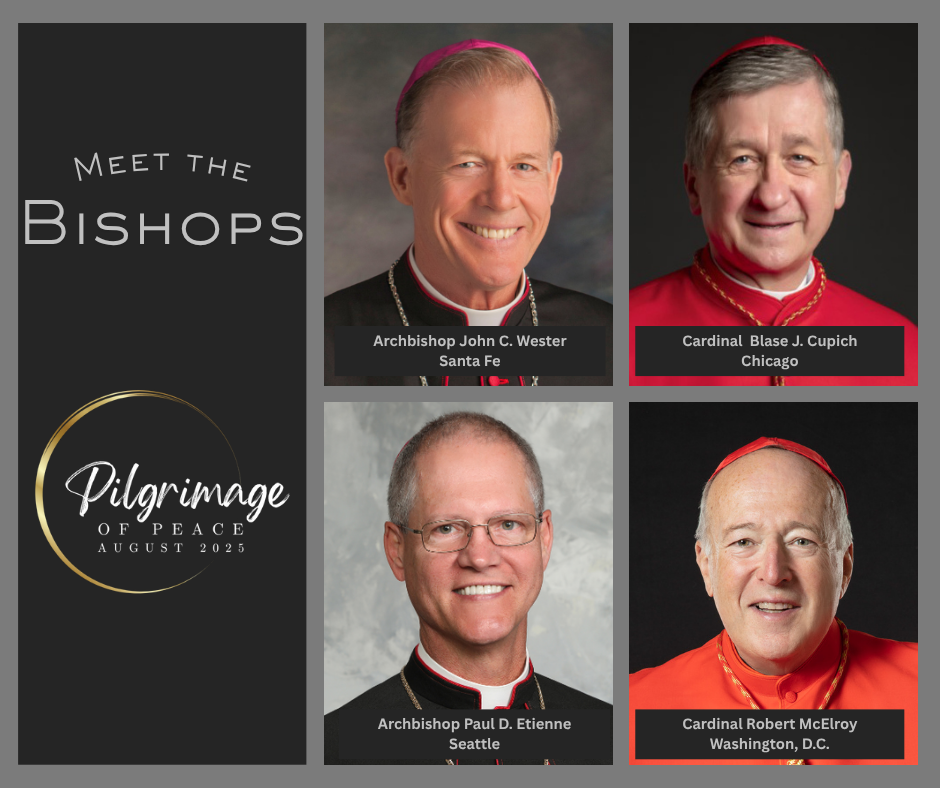
25.07.23 NEWS RELEASE: U.S. Catholic Bishops to Join Pilgrimage of Peace to Japan on 80th Anniversary of Atomic Bombings - Pilgrimage Will Include Cardinal Cupich, Cardinal McElroy, Archbishop Etienne, Archbishop Wester More>
-
2025 Pilgrimage of Peace blog
Photo Recap: August 5 - Meeting with Mayor Matsui Kazumi, Hiroshima - Peace Mass in Hiroshima - Peace Symposium | August 6 - Hiroshima in the morning, Peace Mass - Academic Symposium | August 7 - Mass at the Japanese-style chapel inside the former Jesuit novitiate - Symposium/Dinner with members of the Nagasaki Interreligious Fellowship for Peace | August 8 - Commemorative Ceremony for the Victims of the Atomic Bombing (organized by the Nagasaki Interreligious Fellowship for Peace) | August 9 - Peace Memorial Mass - Urakami Cathedral | Evening Peace Memorial Mass | Photos by Mihoko Owada, Catholic Standard
August 10 – Nagasaki
Today, the Pilgrimage of Peace ended in prayer, dialogue, and friendship.
Morning Mass at Oura Cathedral - The pilgrims gathered in the oldest church in Japan, where hidden Christians were rediscovered after centuries in hiding. This sacred place calls us to remember the courage of those who kept the faith alive.
Pilgrims of Peace Walking Together at Urakami Cathedral - From New Mexico to Nagasaki, voices share stories of resilience, hope, and a future free from nuclear weapons.
Farewell and Thanksgiving Dinner at Dejima Wharf - They ended the day in gratitude for new friendships and renewed commitment to peace. Please pray for the safe return of all our pilgrims.August 9 - Nagasaki (Click here for Archbishop Wester's reflection)
Today marks the anniversary of the atomic bombing of Nagasaki. The Official Commemoration Ceremony will take place at Nagasaki Peace Park (invited guests only), with public viewing at Dejima Messe Convention Hall near Nagasaki Station. A gathering at Tenshu Park near Urakami Cathedral will feature the ringing of the new bell donated by U.S. Catholics at 11:02 a.m. (which is 8:02 p.m., Aug. 8 MT)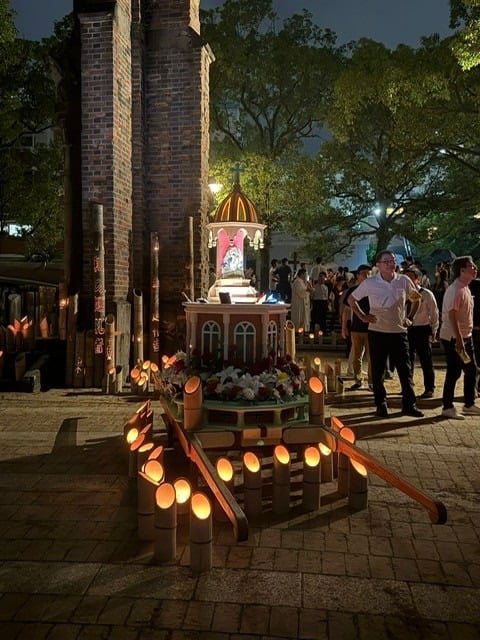 . The day concludes with the Peace Memorial Mass at Urakami Cathedral at 6:00 p.m.
(Atom-bombed Mary (Hibaku no Maria) aka Our Lady of Nagasaki or the Virgin of Nagasaki in the Urakami Cathedral, survived the atomic bombing in Nagasaki on August 9, 1945. Photo Dr. Myrriah Gomez, UNM)
August 8 - Nagasaki
Today is a free day for most pilgrims, except for student program participants. The day begins with Mass at Nakamachi Church, rebuilt in 1951 after its destruction in the atomic bombing, with support from North American Catholics.
Students and facilitators will visit the Nagasaki Atomic Bomb Museum and the National Memorial for the Victims of the Atomic Bomb, then join Junshin Middle and High School for “Encounters and Hope” — a dialogue between U.S. and Japanese university students to prepare a joint prayer and statement for the August 9 Peace Mass.
The day concludes with a Commemorative Ceremony for the victims of the atomic bombing at Nagasaki Hypocenter Park, organized by the Nagasaki Interreligious Fellowship for Peace.
August 7 - Hiroshima & Nagasaki
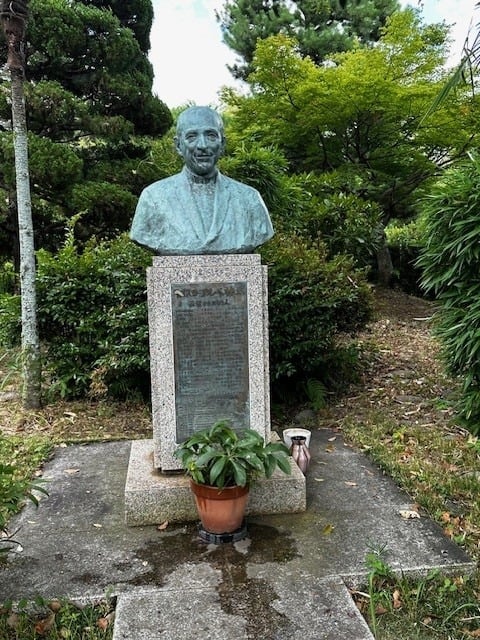
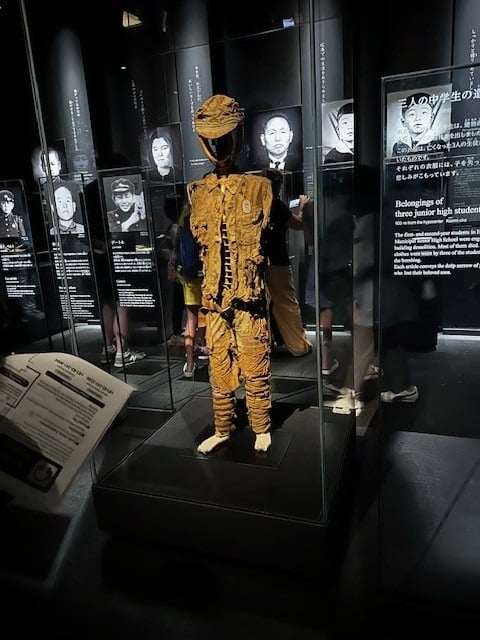
The Pilgrimage of Peace continued with a morning tour of the Hiroshima Peace Memorial Museum and a visit to the former Jesuit Novitiate in Nagatsuka, where Fr. Pedro Arrupe, S.J., and other Jesuits and women religious operated a rescue center in the aftermath of the atomic bombing.Later in the day, pilgrims travelled to Nagasaki for a Symposium and Dinner with members of the Nagasaki Interreligious Fellowship for Peace.
Key participants included:
Cardinal Blase Cupich, Archbishop of Chicago
Cardinal Robert McElroy, Archbishop of Washington, D.C.
Archbishop John C. Wester, Archdiocese of Santa Fe
Archbishop Paul Etienne, Archdiocese of Seattle
Robert Dowd, C.S.C., President, University of Notre Dame
Delegates from Georgetown, Marquette, Sophia, Loyola, and Notre Dame Universities
Emilce Cuda, Secretary, Pontifical Commission for Latin America
The evening conclu
 ded with a special dinner for the students, bringing together young people from Georgetown, Marquette, Sophia University, Loyola, Notre Dame, and the University of New Mexico, fostering dialogue and shared commitment to peace and nuclear disarmament.
August 6, 2025 - Hiroshima
On the anniversary of the atomic bombing of Hiroshima, pilgrims will gather for a full day of prayer, learning, and unity in the cause of peace.The Mass for the Victims of the Atomic Bombing at the World Peace Memorial Cathedral began with 19 minutes of silence, followed by the bells tolling for the moment the bomb was dropped. The homily was given by Cardinal Blase Cupich, Archbishop of Chicago.
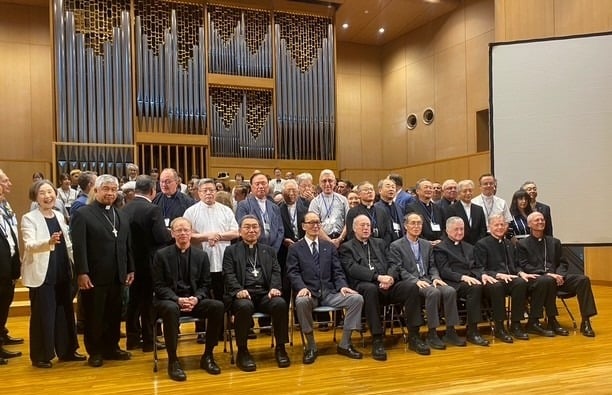 An Academic Symposium was held at the Elizabeth University of Music Cecilia Concert Hall and featured organ music, keynote addresses from Cardinal Robert McElroy, Archbishop of Washington, D.C., and Robert Dowd, CSC, panel discussions on the Ethics of Nuclear Policy and Nuclear Justice, and a concluding reflection and prayer from Archbishop Paul Etienne of Seattle. This day of remembrance and dialogue invites us to honor the past, work for peace in the present, and hope for a future free from nuclear weapons. (photo Jay Coghlan)
August 5, 2025 - Hiroshima
Pilgrims visited the Hiroshima Peace Memorial Museum, the Genbaku Dome, and the National Peace Memorial for the Victims of the Atomic Bombing in Hiroshima Peace Park. Bishops and university leaders also met with Mayor Matsui Kazumi and shared in dialogue for peace.

Later that evening, the Hiroshima Diocese Peace Event — “80 Years of the Atomic Bombings: Toward Collaboration for Nuclear Weapons Abolition” — honored the Japan Confederation of A- and H-Bomb Sufferers Organization, celebrating their Nobel Peace Prize with moving messages from Nobel Laureates, atomic bomb survivors (hibakusha), and bishops from the U.S., South Korea, and Japan.
Their day concluded with a Peace Mass at the World Peace Memorial Cathedral, featuring a message from His Holiness Pope Leo XIV to the Diocese of Hiroshima and a homily by Cardinal Kikuchi, Archbishop of Tokyo. Read Pope Leo XIV's message: bit.ly/Pope_Hiroshima
(photos from 2023 Pilgrimage of Peace - Leslie M. Radigan/ASF unless otherwise noted)
-
2025 Pilgrimage of peace keynotes, homilies, discussions, prayers
- Joint Statement
- Aug. 5 McElroy: Catholic Teaching on the Immorality of Possessing Nuclear Weapons
- Aug. 5 Wester: Bishops and Hibakusha Dialogue
- Aug. 5 Etienne: Weapons of Peace: A Call to Personal and Communal Peacemaking
- Aug. 6 Cupich: Homily for Feast of the Transfiguration
- Aug. 6 McElroy: Renewing Catholic Teaching on War and Peace
- Aug. 7 Cupich Nagasaki Remarks
- Aug. 7 McElroy: As Witnesses to Trancendence, We Become Builders of Peace
- Aug. 7 Wester: Nagasaki Interreligious Fellowship for Peace Symposium
- Aug. 8 Etienne: Commemoration of the Victims of Nagasaki
- Aug. 9 McElroy: Peace Mass Remarks at Urakami Cathedral
-
2023 Pilgrimage of Peace
The archbishops of the Archdiocese of Santa Fe and the Archdiocese of Seattle traveled to Japan in August 2023. The mission of the Pilgrimage of Peace was to establish an ecclesial and personal relationship with the bishops of Japan to work toward the abolition of nuclear weapons, expressing our heartfelt sorrow for the devastating experiences endured by their nation. To experience the pilgrimage, please visit the 2023 Pilgrimage of Peace blog here.